The Fundamentals of Returning to School: Preparing Students and Families for a Successful School Year
The Culture Inc e~Mag Vol 2 Issue 2
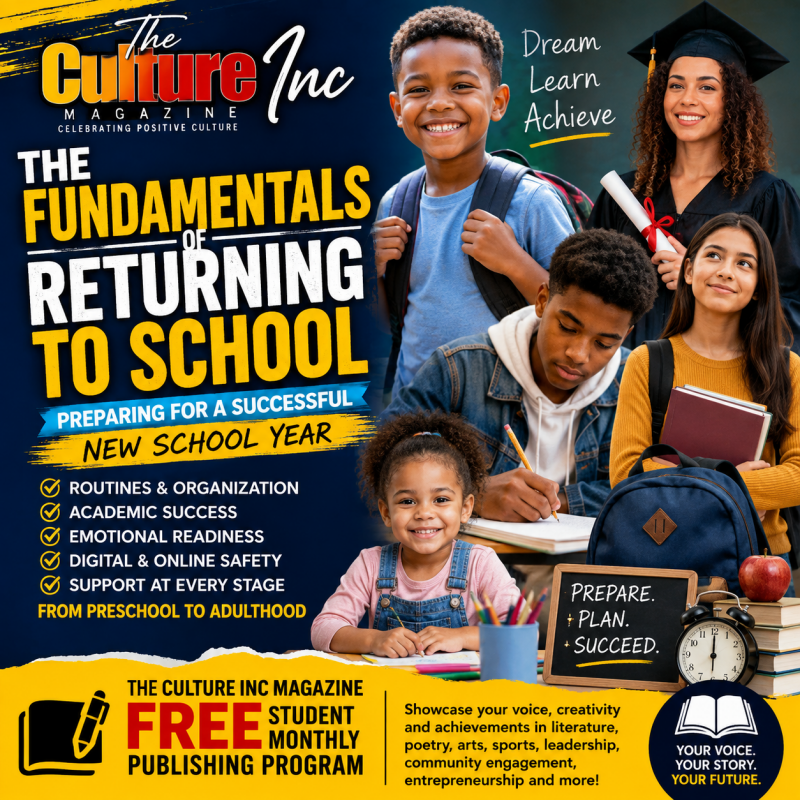
As summer comes to an end, returning to school is about much more than buying backpacks, notebooks and new clothes. A successful school year begins with preparation—physically, emotionally, academically and financially. Whether a child is entering preschool, starting elementary school, heading into middle or high school, attending college, returning to an adult education program or pursuing a new career skill, every student benefits from having a plan. Establishing routines before classes begin can help make the transition less stressful and create a stronger foundation for learning.
Start With the Basics: Routine, Organization and Readiness. Parents and caregivers should begin by reviewing the school calendar, transportation arrangements, required forms, school supply lists, uniforms or dress codes, technology requirements and important contact information. It is also a good time to establish a consistent sleep and morning routine. Younger children may need practice getting dressed, putting on their shoes, carrying their backpack, opening lunch containers and following simple instructions. Elementary students can begin taking greater responsibility for their backpacks, homework and personal belongings, while teenagers and young adults should increasingly manage their own schedules, assignments and responsibilities. Consistent routines can provide children with security and help the entire household begin each day with less confusion.
Every Age Has Different Needs. Preschool and kindergarten students may need extra reassurance as they adjust to separation, new teachers and unfamiliar environments. Elementary students need encouragement to develop reading, homework and organizational habits. Middle and high school students face increased academic, social and extracurricular responsibilities and should be encouraged to communicate with teachers and become advocates for themselves. College students and adults returning to education may need to think beyond school supplies and focus on time management, transportation, finances, technology, work-life balance and long-term educational or career goals. The older the student becomes, the more preparation should shift from parents doing everything for them to parents helping them learn how to do things for themselves.
Don't Forget Emotional and Digital Preparation. A new school year can bring excitement, but it can also bring nervousness, anxiety or uncertainty. Parents should create opportunities for honest conversations about what children are looking forward to and what may concern them. Visiting a new school, reviewing schedules and discussing transportation can make unfamiliar situations feel more manageable. Families should also establish expectations for responsible technology use, including appropriate screen time, social media habits, online safety and minimizing digital distractions during homework.
Prepare the Home for Learning. Students benefit from having an organized place to complete schoolwork, whether that is a dedicated desk, kitchen table, library or quiet community space. Families should establish a system for school papers, permission slips, calendars and important deadlines. Parents should also maintain communication with teachers, counselors and school staff and ask questions when their student needs additional support. Family engagement is an important part of student success, and parents should view themselves as partners in the educational process rather than simply observers.
Most importantly, returning to school should be viewed as a new beginning and an opportunity for growth. The goal isn't perfection; it is preparation, consistency, communication and encouragement. Parents, caregivers and students should celebrate progress, learn from challenges and remember that education does not stop at a particular grade level or age. From a preschooler learning their first letters to an adult earning a degree, certification or new professional skill, every educational journey deserves support and recognition.
The Culture Inc Magazine FREE Student Monthly Publishing Program
As part of its commitment to education, creativity and youth development, The Culture Inc Magazine offers a FREE Student Monthly Publishing Program for students in grades K–12. The program provides young people with an opportunity to have their original work published once a month in the e-Magazine, giving students a platform to showcase their voices, talents and accomplishments.
Students can submit work connected to literature, poetry, creative writing, arts, sports and recreation, leadership, community engagement, entrepreneurship, education and other positive areas of student achievement. The program encourages young people to write, create, participate and take pride in their accomplishments while gaining valuable exposure and experience in publishing.
Education is not simply about preparing students for the next grade—it is about preparing them for life. The Culture Inc Magazine believes every student has a story, talent or idea worth sharing. The FREE Student Monthly Publishing Program is designed to help give those voices a platform while encouraging creativity, confidence, leadership and community involvement throughout the school year.
Published July 2026
Add comment
Comments
Can you recommend resources in my area?